Reducing Dining Room Echo: Wequaquet Lake Yacht Club

This week we received feedback from Wequaquet Lake Yacht Club in Centerville, Massachusetts – a facility we recently worked with improving dining room acoustics.

Acoustical Solutions Rep Aaron Duncan:

“Mr. Bob Hurley called me a few months back with a sound issue in a moderately sized event and gathering hall for the Wequaquet Lake Yacht Club (WLYC) in Centerville, MA. The space was a dining hall located on the back of the yacht club sitting right on the water. The room itself, had windows on the 3 of the walls, from ceiling to floor, leaving no space for wall panels which would have been the go-to product. The noise of just two-thirds of the room being occupied by guests was overwhelming for anyone wanting to have a civilized dinner conversation. The ceilings were approx 12’ high but free and clear with the exception of a few lights and ceiling fans. I suggested the 2” thick, flush mounted AlphaSorb Panels. After running several tests to show a before and after of the products as recommended, they decided to purchase these and have them installed before the club opening event for the season. They were in a bit of a time crunch so we pushed to have them completed in just 2 weeks.”

BEFORE PICTURE:

Bob Hurley of Wequaquet Lake Yacht Club:

“Aaron,clouds

I want to thank you for your attention to our sound attenuation issue at WLYC.  You got the panels to us ahead of schedule and we really appreciate it.  We have already installed the panels, and I was anxiously awaiting feedback from the first gathering.  I wasn’t sure if the project would be considered a success or whether it would forever be known as Hurley’s Folly.

This past Saturday, we had a gathering of 100+ and everyone was amazed.  Most confessed that they though the panels would never work, but everyone involved said they could hear each other speaking, even when the music was loud.  Huge improvement!

Bob Hurley


Our AlphaSorb Flush Mounted Cloud Panels are a perfect solution for reducing dining room echo when no wall space is available. Learn more here


Soundproofing an Apartment: Non-Invasive Fixes for Quieter Renting

shoenounderlaymentSo you’ve found the apartment of your dreams – great neighborhood, great price, beautiful appliances. You move all your stuff in and settle down for the night when you realize… I CAN HEAR EVERYTHING MY NEIGHBORS DO.

You hear your them upstairs walking around in heels on the tile floor, you hear them across the hall slamming their door, and you hear your neighbor’s favorite late night TV shows through the shared wall in your bedroom. You know nothing about soundproofing an apartment, but something has to be done.

What do you do? You look up how to soundproof on the internet. The problem with this is that you will probably run into a lot of two things: myths that will waste your time (egg cartons, really?) and solutions that not only cost thousands of dollars, but are meant to be implemented during construction or require permanent modification of your dwelling (which your landlord may or may not be okay with).

After you’re done sorting through all this, you come to a few conclusions:

1. There is no temporary fix.

Anything that will actually yield satisfactory results when soundproofing a wall or ceiling will not be easy to slap up and tear down when you move out of your apartment. Noticeable wall and ceiling soundproofing requires that you add massive materials to the structures, and make them airtight. No shag rug hung behind your headboard will keep you from hearing your neighbor’s watching America’s Funniest Home Videos playing at full volume.

2. I am doomed! (But you’re not).

Your best bet is to identify where the sound is coming from. If it is clearly coming through one shared wall, focus on that area. If it is loudest near your front door or kitchen window, start there.

Automatic-Door-BottomIf the sound is coming through a door, you can purchases a solid core door if your current one is too lightweight and trade it out, putting the original back when you move again. Even with a heavy door, however, sound may still come through the gaps – in which case you may consider acoustical door seals.

If the sound is coming through a particular window, cover the window with heavy curtains. If the sound is still too noticeable, consider an acoustical window seal. These seals add an additional pane of glass and create a dead space, reducing sound transmission from outdoor noises. They do, however, need to be installed with screws. Read over your rental agreement and maybe talk to your landlord about whether adding screws to the window frames is acceptable. You can always fill the holes later when you uninstall.Green Glue Illustration

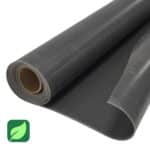
Here is a trickier one – airborne sound like television, music, and speech coming through your shared wall. Mass and isolation are the two things that will definitely do the trick. Both of these are labor intense, though – and require a level of modification that may be hard to sell your landlord on. Damping compound is then your best bet. Not that it doesn’t work – compounds like Green Glue, which are sandwiched between your existing wall and a new layer of drywall can take your wall’s STC (Sound Transmission Class) rating from 40 to 50. Just make sure that if you do go this route, you seal up the gaps in your new drywall with noiseproofing sealant. There is no point in putting up sound damping material if you are going to leave weak spots.

The trickiest one is impact noise through your floor/ceiling assembly. Damping compound will likely help, but not eliminate the noise. A floor underlayment is normally what we’d recommend, but convincing your landlord or upstairs neighbor that it is necessary to rip up their floor to install may be difficult. Isolation clips can create a ceiling below your existing ceiling, but again installation is labor intense. If neither of these seem possible to accomplish for you, you may just have to talk to your neighbor about putting down a rug or taking off their shoes when they walk around above you. If they are not receptive then try going to your landlord. It couldn’t hurt to ask, especially if you are losing sleep or your quality of life is affected.

When asking your landlord about installing any of these methods, make the case to them that noise does make it more difficult to live there, and that you’d be much more likely to renew your lease if treatment is installed. Hopefully they will view soundproofing an apartment as an investment, saving them money as tenants stay longer.

Please feel free to contact us with any concerns about the methods mentioned in this post, or if you have any unanswered questions about your own apartment noise issues: 800 782 5742 or info@acousticalsolutions.com


Featured Case Study

Acoustical Wall Panels and Ceiling Clouds for The Spirit of the Mountain Band at Liberty University

The Liberty University Band was upgrading and moving to a new rehearsal room when they called Acoustical Solutions.

Together, the two came up with a plan to install acoustic panels and hanging acoustic ceiling tiles to compliment the sound diffusion that had already been planned.

In the end, the noise control solutions that were put into place greatly improved the band room acoustics in the new facility. Read More


Soundproofing Chillers: New College Dormitory Has Unanticipated Noise

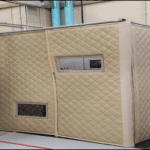
Christopher Newport University0002Most water cooled chillers scream at around 500-600 Hz. Very annoying especially if you have the room above. Soundproofing chillers takes a combination of mass and absorptive material.

Engineers working with Christopher Newport University in Virginia contacted Acoustical Solutions to see what they could do to reduce chiller noise in a new dorm on campus. The chiller was on the first floor of the building and could be easily heard within students’ living areas.

Acoustical Solutions  recommended an ABSC-25 AudioSeal™ Combination Blanket enclosure with a roof. This blanket has an STC-33. The engineer was pleased with this solution because of the acoustical results, cost effectiveness, and ease of access required by operators for maintenance. Because the chiller was water cooled, Acoustical Solutions was able to enclose the chiller completely without having to worryChristopher Newport University0001 about air circulation problems. The result was a overall dB reduction of about 20 dBA (a 10 dB reduction is half as loud to the human ear). The sound was effectively and dramatically reduced, and students were able to move into their dorm rooms.

Note: We have also used this type of enclosure around several chillers in the basement of the historic homes at Colonial Williamsburg Foundation. They don’t like chiller noise for the visitors. In case you are wondering, they didn’t use water cooled chillers in Colonial Times so they didn’t have to worry about the noise.


Learn to Soundproof: Get Acoustics Tips Delivered to Your Inbox

Have  a noise issue and not sure where to start? Acoustical Solutions delivers quarterly email newsletters across a wide range of topics. Each issue is full of information, promotions, and tutorials to helpCropped Studio you understand how sound travels – and how to stop it.

Learn to soundproof by signing up for our quarterly newsletters here!


Four Tips for Soundproofing Rental Units

If you manage or own a multi-family dwelling, you can count on noise being a top complaint from your tenants. It’s not easy living so close to one another – especially with paper thin walls and Soundproofing rental unitsneighbors with differing schedules.

Soundproofing rental units can make a world of difference for tenants who will be more comfortable, happier, and stay longer!

There are, however, a few steps you can take to help your tenants hear less from their neighboring units.

1. Think about the floors.

Sure, carpet is quieter than tile or hardwood – but how appealing is a FULLY carpeted apartment? In 2013… not very. An acoustical underlayment that has an IIC rating, meaning it absorbs impact noise before it can travel through the floor to the ceiling below, will greatly reduce or eliminate the sound of footsteps that tenants can hear from their upstairs neighbors. If you find an underlayment with an both an IIC and an STC rating, this means it will not only reduce footfall noise transmission, but block some airborne noise like speech, music, and televisions as well.

audioseal_room2. Think about the walls.

Just like floors, airborne noise can also make its way through the walls separating units. The most effective soundproofing techniques for walls include Mass Loaded Vinyl, which is installed during construction or when the wall is open, and attached to the studs – or creating a ‘floating wall’ or ‘room within a room’ by installing resilient isolation clips and a new layer of drywall, mechanically isolated from the previous layer. You can even do both for superior results.

*Pro tip: if your walls are already finished and closed up, you can also use a damping compound like Green Glue and an additional layer of drywall.

3. Think about the doors.

Remember the 1% Rule: A 1% opening will allow up to 50% of sound to pass through a wall, door, barrier, etc. So more often than not, if tenants are hearing their neighbors, it may be coming through gaps around openings like doors and windows. Using a well-fitting, solid core door is always a good start, but if more sound attenuation is needed, an Acoustical Door Seal Kit can be attached around the existing door to make it airtight – and soundproof.

4. Think about the cost.

While you may have foreseen the necessity and benefit of soundproofing rental units, not everyone will want to, or need to, invest in all of the above soundproofing techniques. Think about what noise issues specifically your tenants are bringing to your attention, and how that noise is being transmitted between units. Addressing only the true problem areas will save you a lot of time and cash.

Need help identifying the source of your noise transmission? Give us a call for a free acoustical consultation. One of our knowledgeable Architectural Sales Reps would love to talk you through your noise issue and any possible solutions: 800 782 5742


Switch to our mobile site